




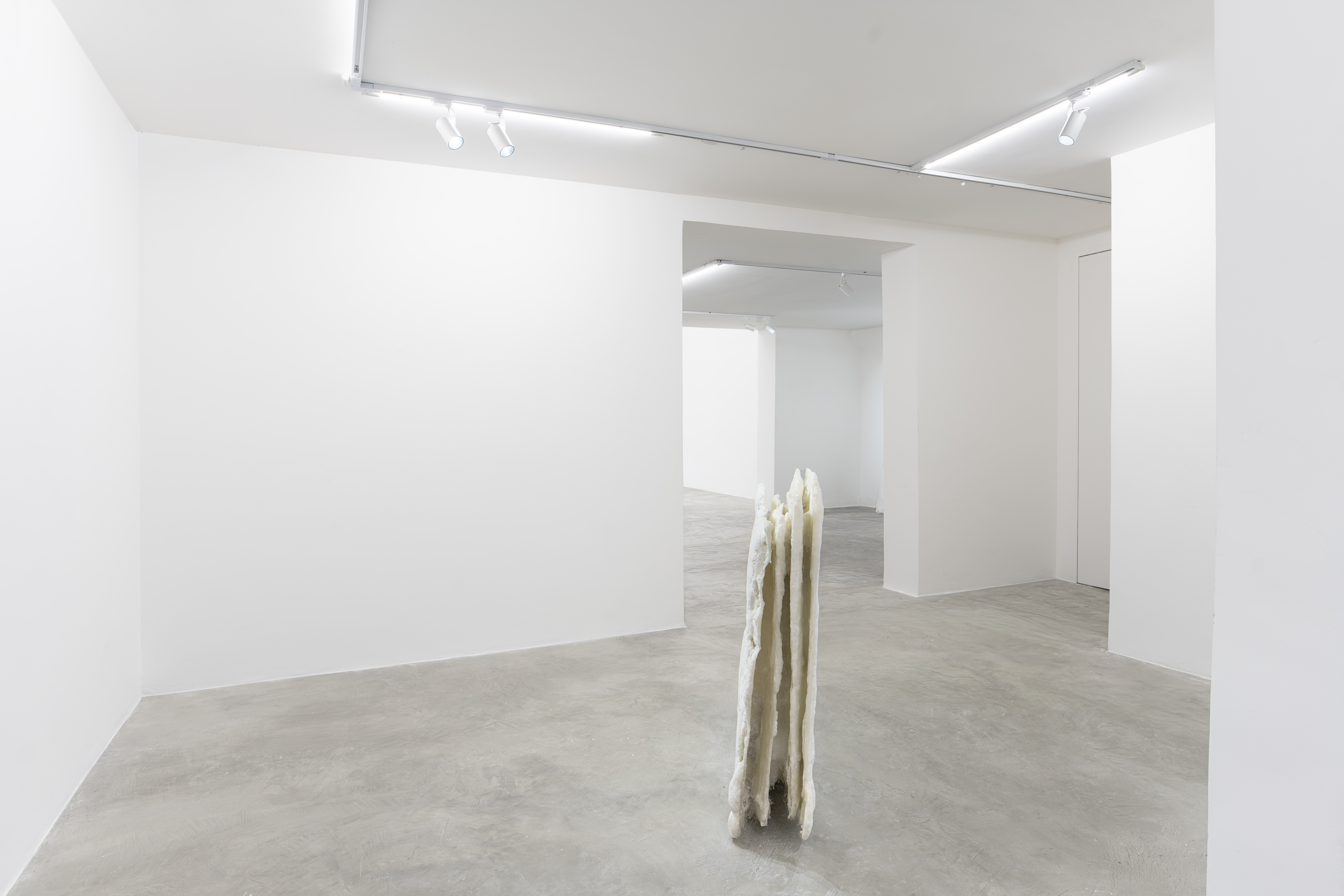
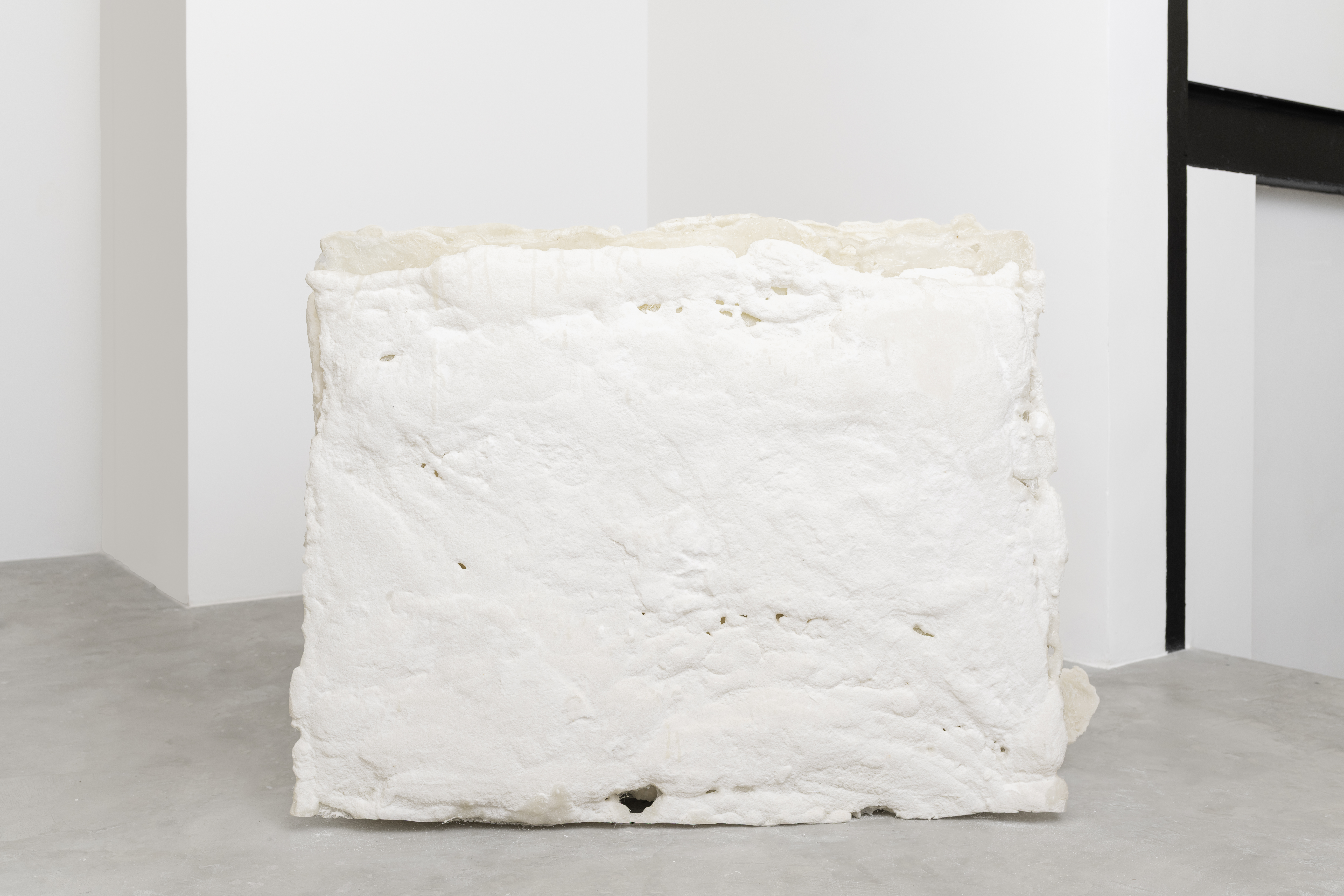
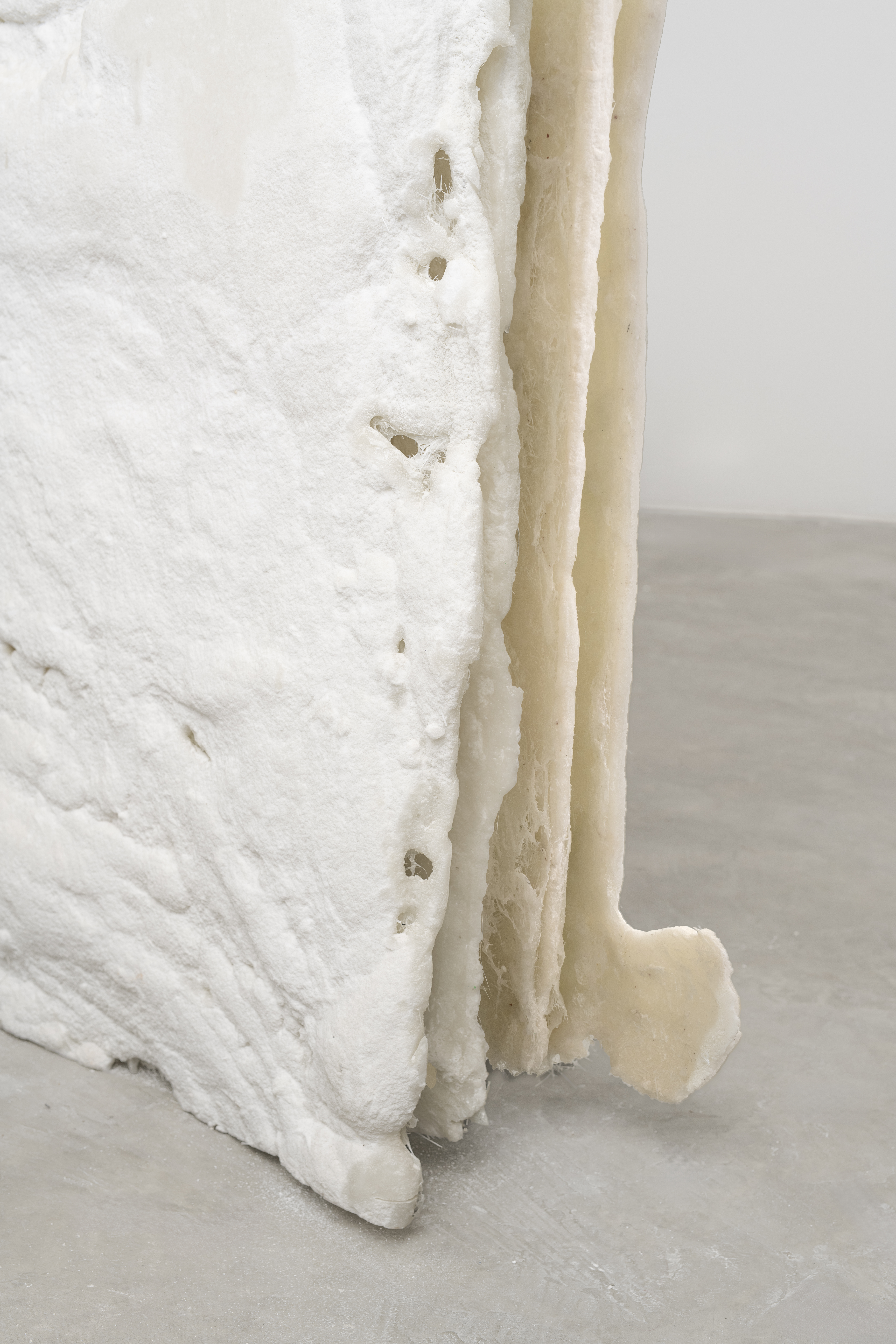
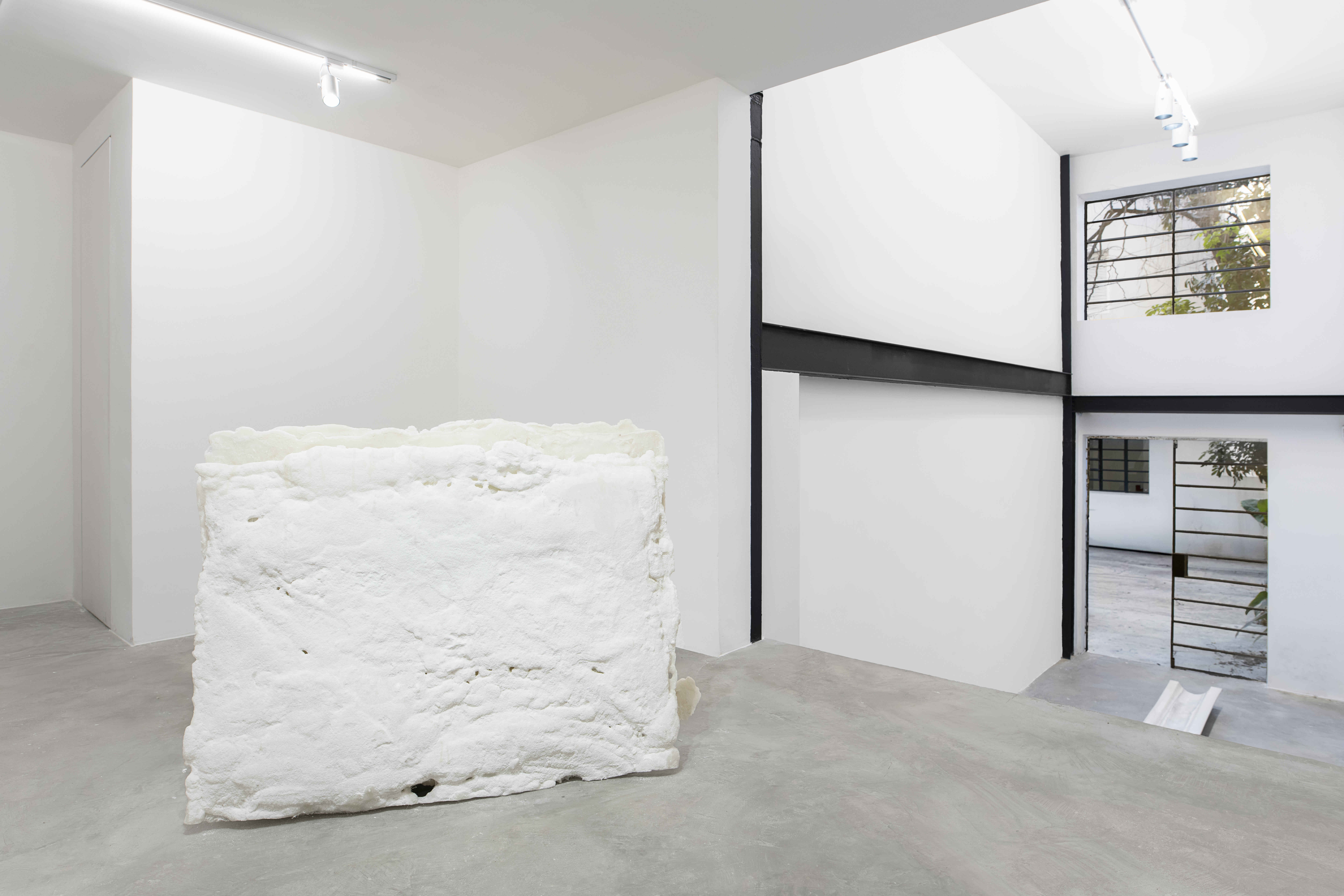


Violence And Blessing
If we think it through, there would be nothing to expect from the earth and the
physical phenomena that surround us. We wouldn’t be looking for answers or even
for understanding of life’s dilemmas and the material and social dynamics that
shape it. We wouldn’t be dissatisfied, and we wouldn’t fall back into prestige games
and rhetorical disputes. We’d watch the water flow down the mountain, the crash of
waves against the rocks, and we’d understand erosion as pure scintillation. We’d
understand the strange yet undeniable character of communion that an infiltration
can have with the wall it infiltrates.
It is in this place that I see Samuel Alves de Jesus’s work unfold. To do so, I
need to point to a certain massacre that weighs on the possibilities of emerging
sensibilities. This takes shape within a universe of scarcity and a posture made
up essentially of greedy cynicism. When I speak of the blocking of emerging
sensibilities, I am speaking of the arts, but not only of them. It is hard not
to think of Peter Sloterdijk’s book Rage and Time. He explains that “the more a
society is pacified in its fundamental traits, the more colorfully the flourishing
of everyone’s envy of everyone else shows itself.” None of this is pretty, of
course. But I am left with two questions. First, what are these fundamental traits
of society? And next, what are the paths created by art to deal with the concrete
and metaphorical battles imposed on each of us?
Samuel’s exhibition seems to generate a few hypotheses. Regarding the fundamental
traits, Samuel makes me reconsider a keyword against which all sorts of antagonisms
bear down: communication. This concept has been quantified to exhaustion, yet it
still holds a foundational place in our relationships. Samuel reminds us that
communication does not reside in the media but is centered in the body and in the
abstract, unquantifiable effects it reveals.
There is no promise to be kept. No revision to be made.
The work takes place only through a commitment to the artist himself and to
his physical experience in the world. If we consider the human desire for
interpretation, and more specifically its narrative impetus, manifest in both art
and politics, we would see here a possibility of resistance to this essentially
tragic movement of history. If the work offers itself to the field of aesthetics
and to cultural debate, it is not done to point the way. This desire is ours, but
not the work’s, not Samuel’s. What it tries to do is provide new contexts for the
idea of presence, of materiality, and of communication.
Intimacy and immensity
To know an artist intimately, perhaps, means to observe how they distribute
meaning among the materials — to notice a kind of transfer that happens in a way
that is at once emphatic and discreet.
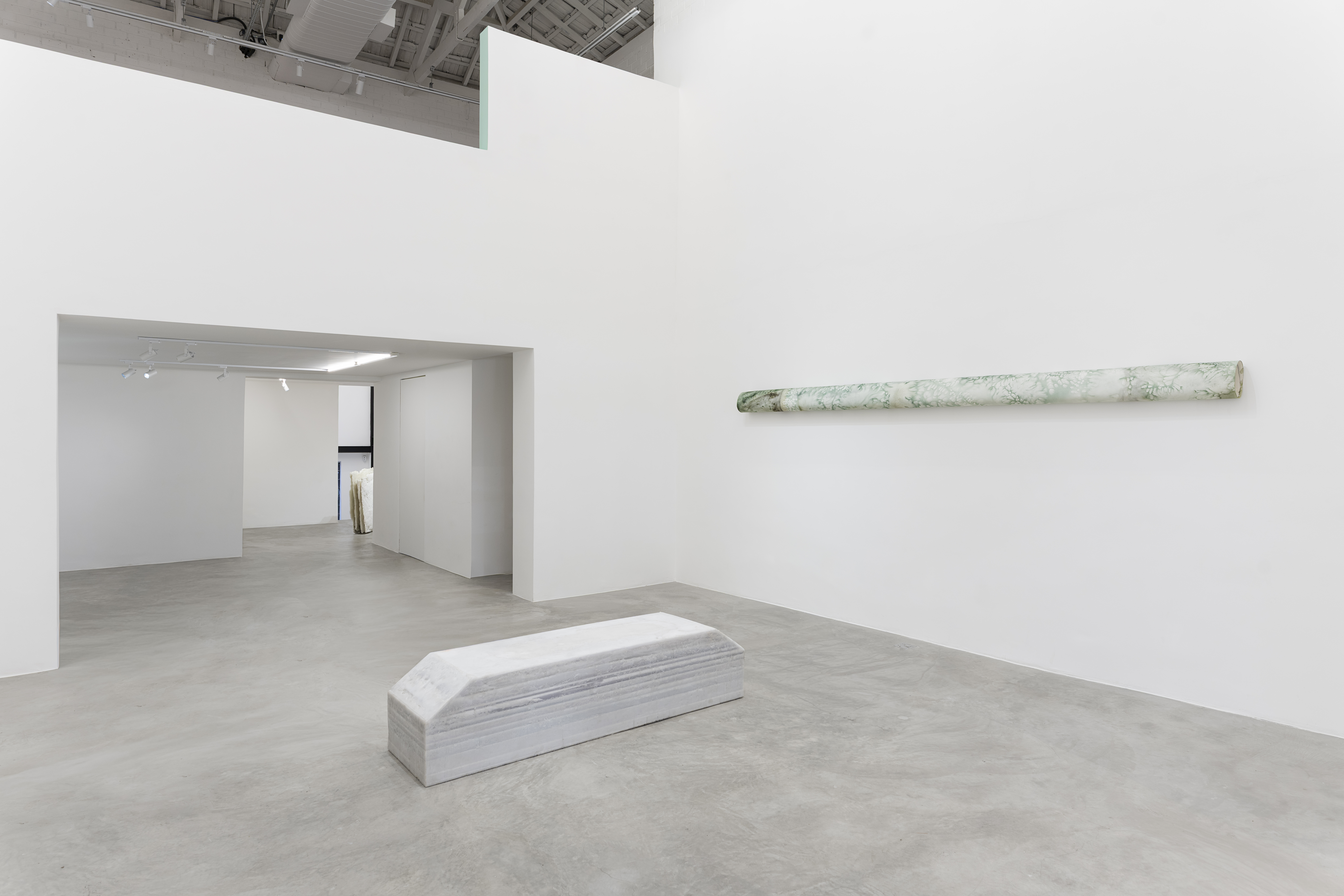
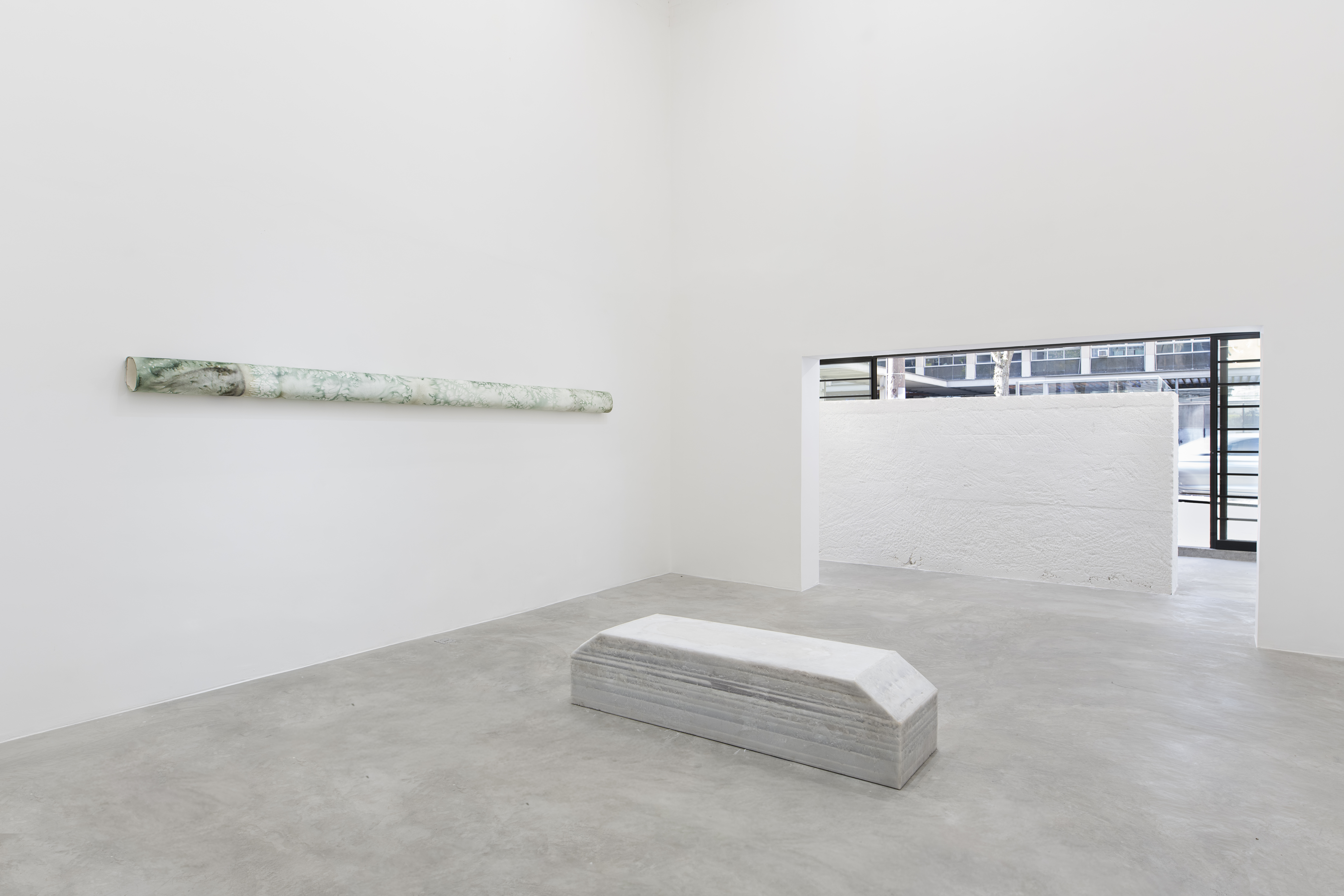
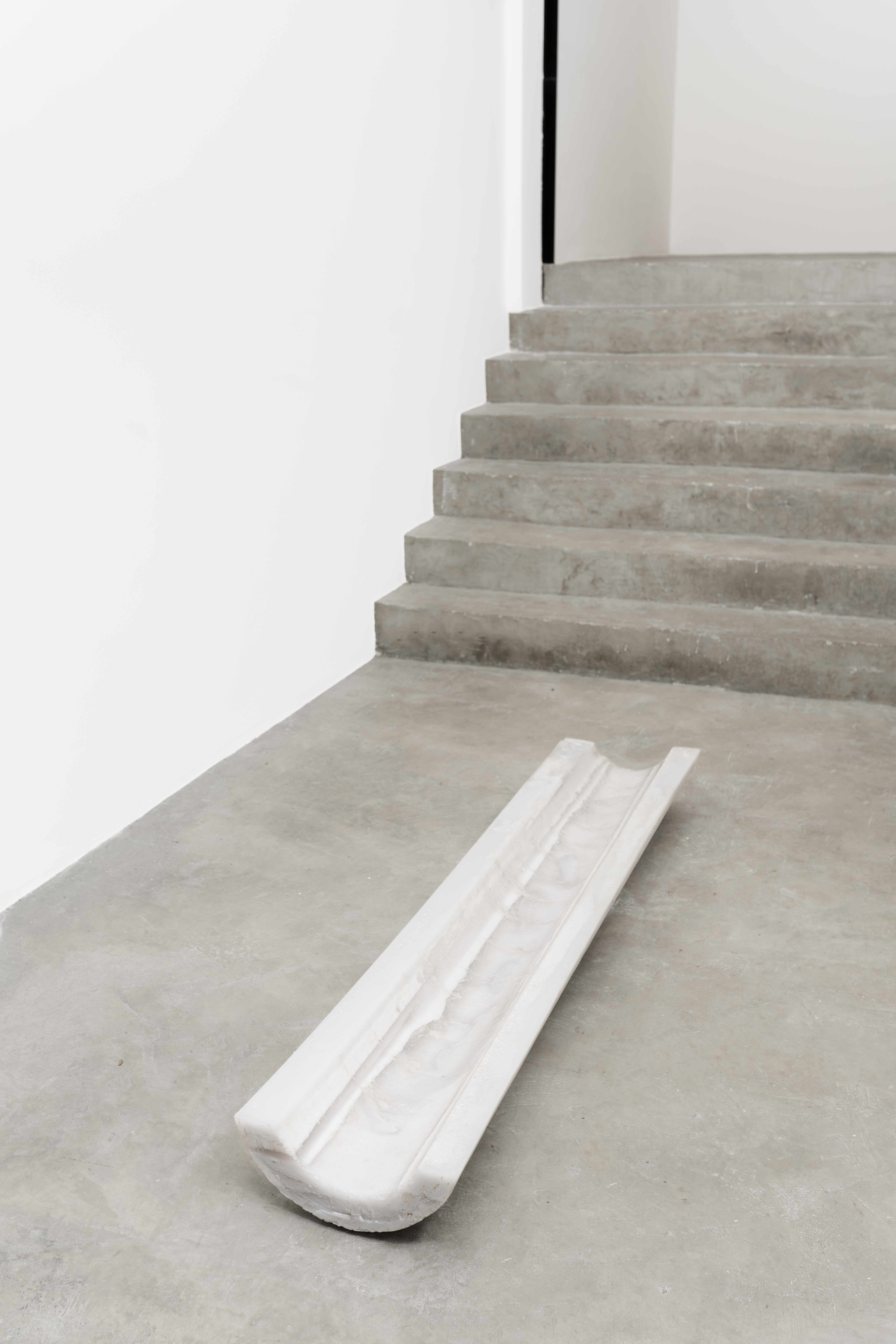
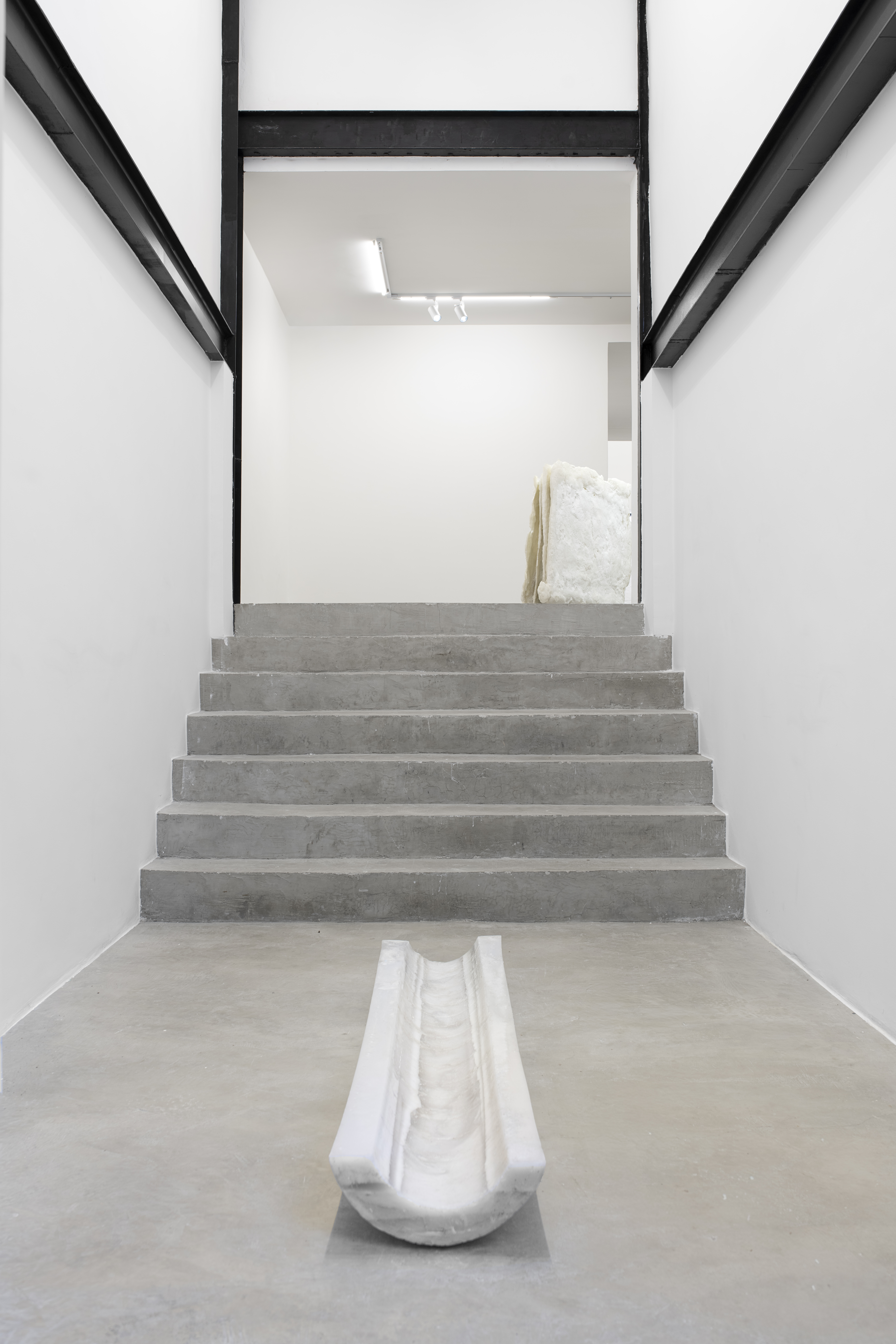
A gutter runs through the exhibition, carrying water. It also carries the gaze.
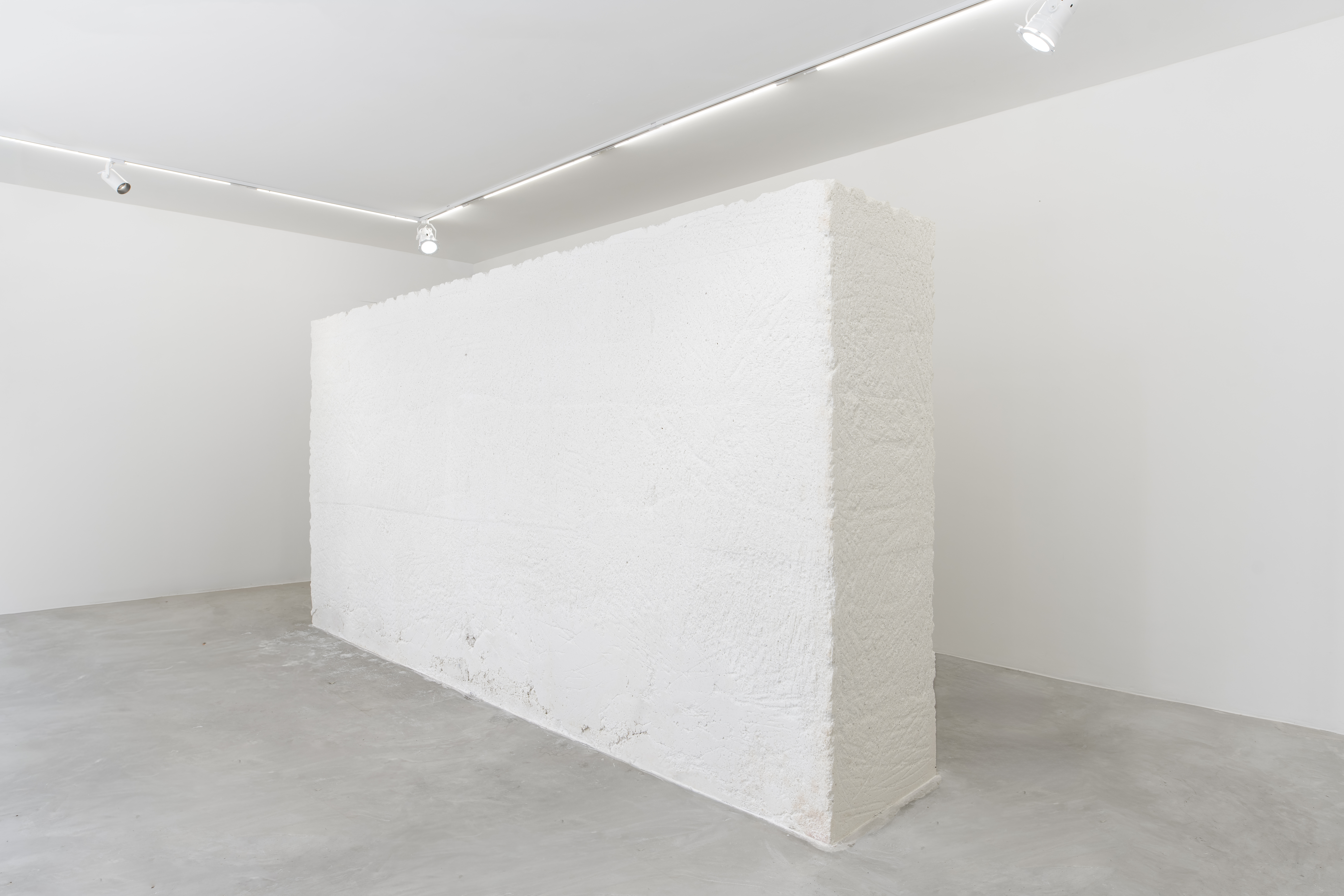
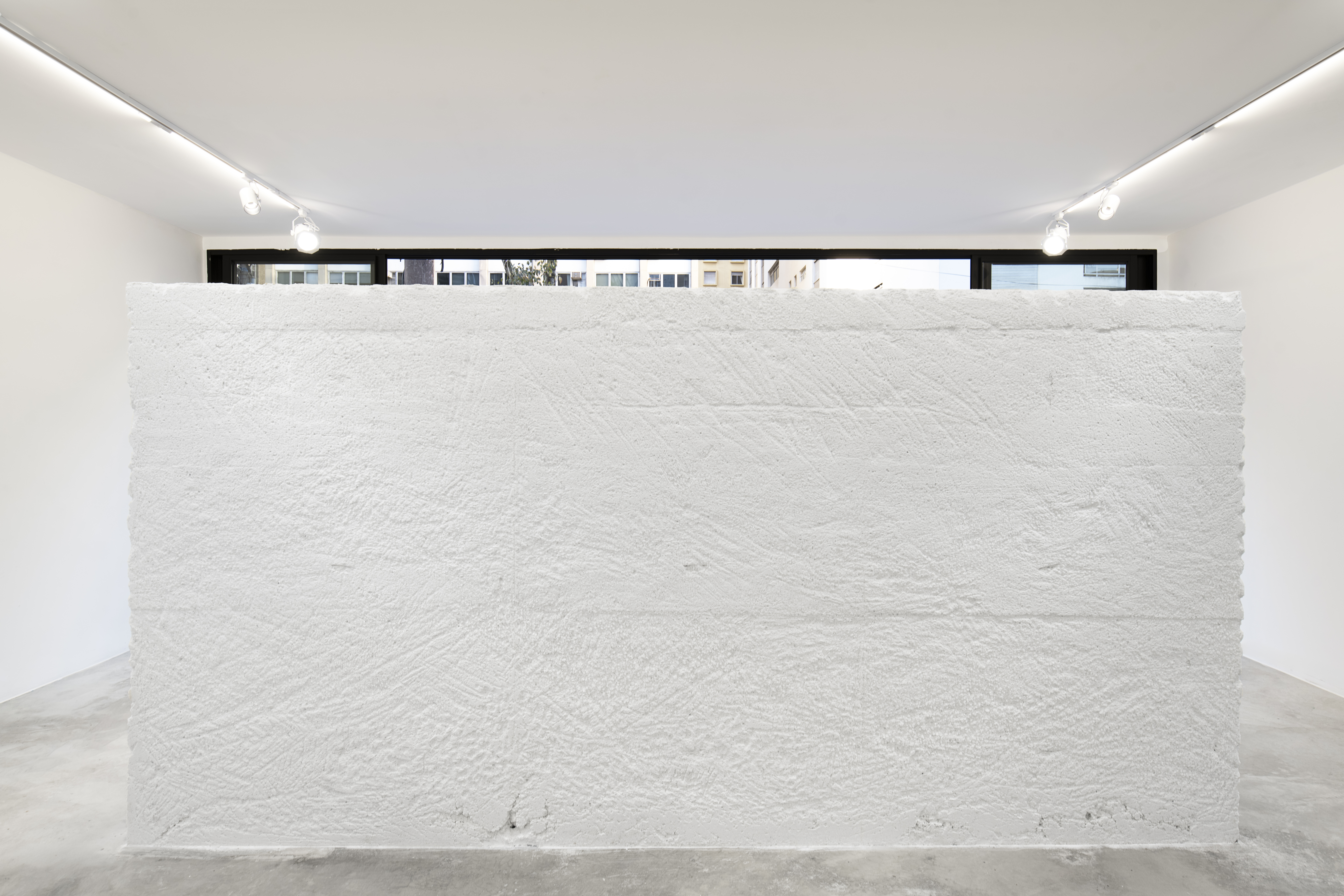
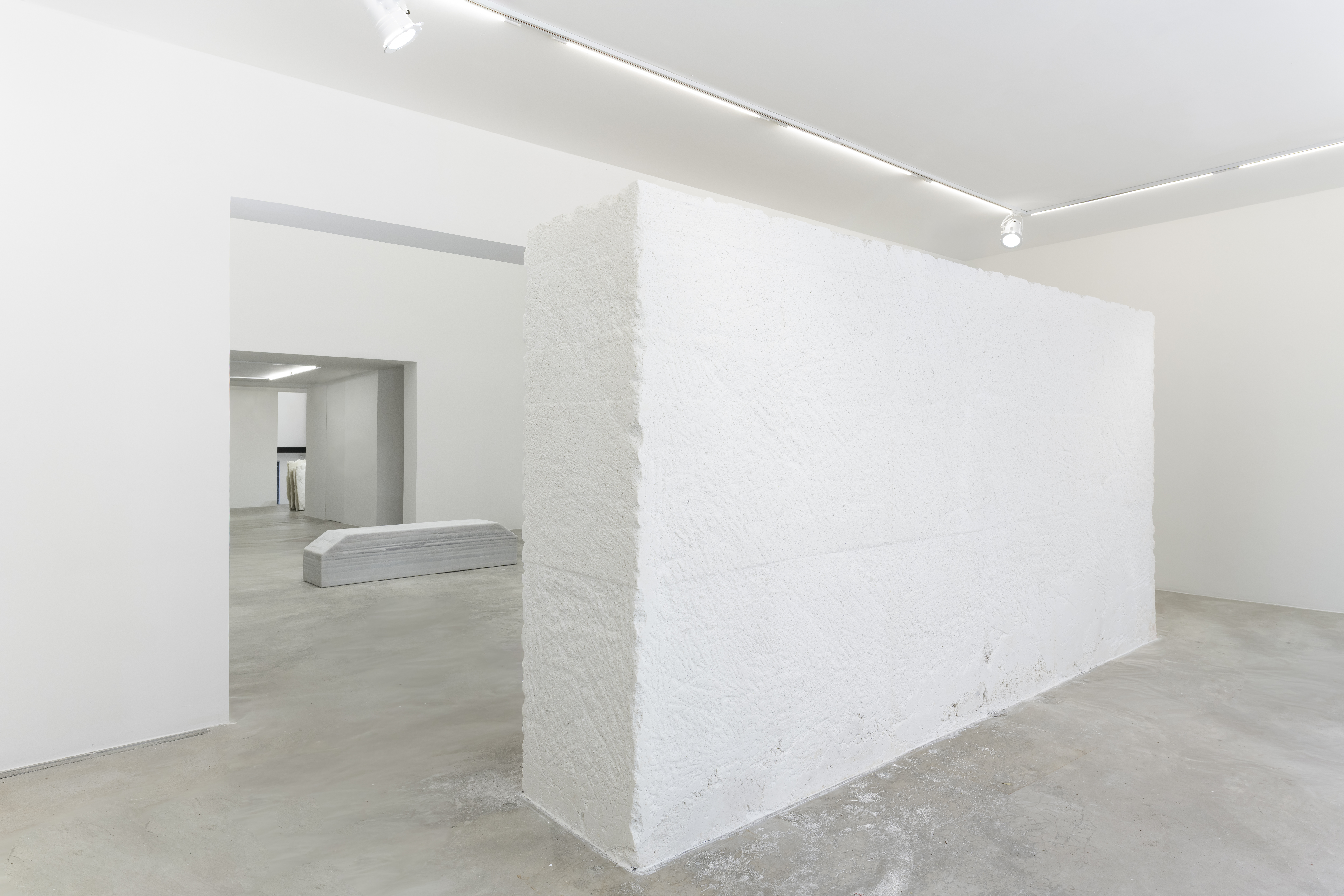
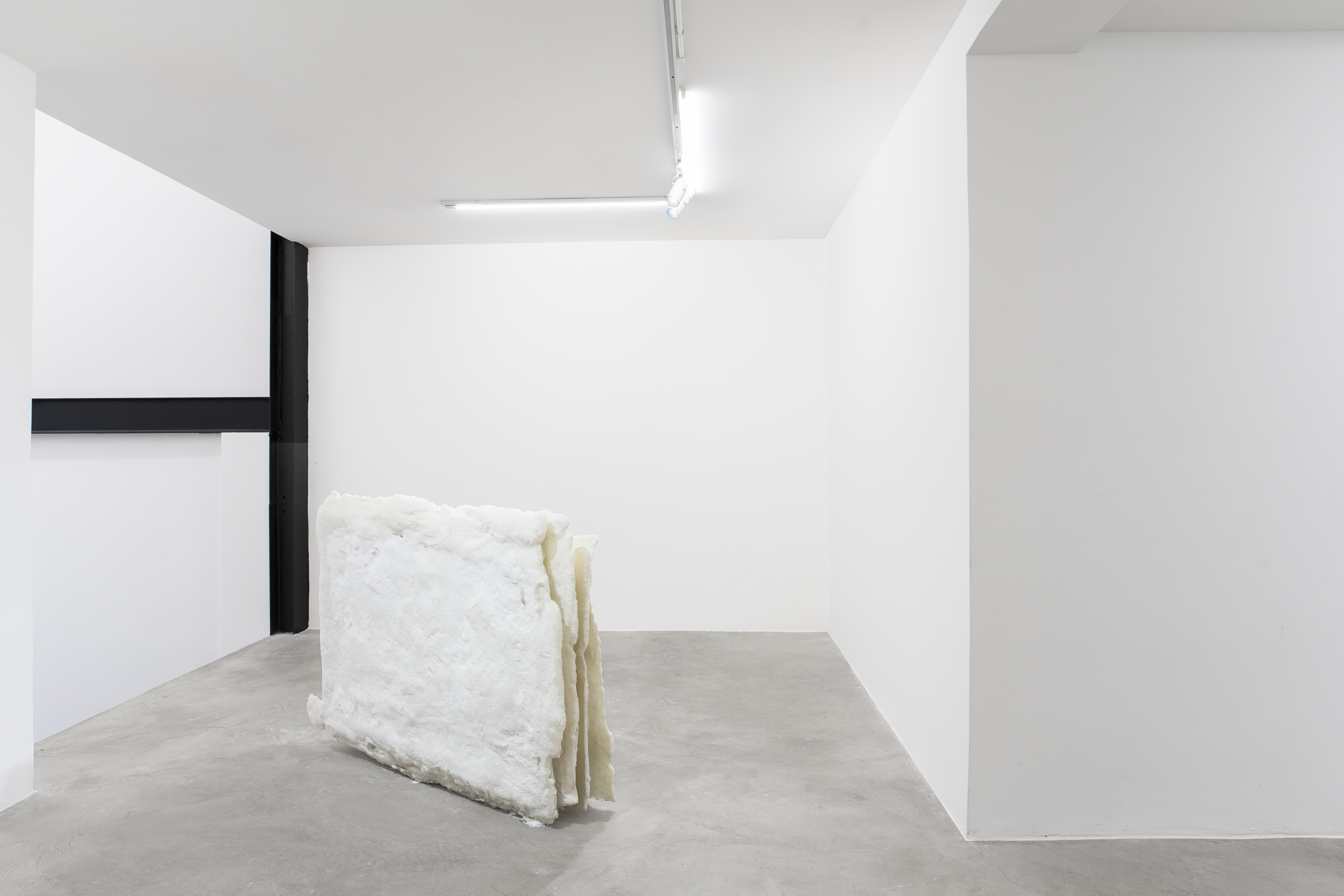
The works do not occupy a space. They create the space. There are architectures
whose function is to contain bodies; others make apparent forces that were already
present. Water appears as an element capable of reorganizing both, and the flow of
things becomes hydraulic, crystallizing a sense of perpetual instability, just
like stalactites in a cave.
This space of happening is dear to Samuel. Communication is taken up again here
as transmission between matter and space. Certain groupings acquire a familiar
Wherever the work arrives is wherever there is an opening for it to take shelter.
Each place produces a spatiality inseparable from its rituals of habitation. There
is no neutral space. Every action qualifies a place; every place gives back a quality
to the action. The paintings seem to know this reciprocity. They change themselves.
In them, there is a refusal of ornament. As if every overly resolved surface hid a
lie. The price of laying the lie bare is high. There is a lot of talk about courage.
Little about what courage requires us to give up.
What is sought is an experience of complete naturalness between us and the work.
Like looking at the sea.
I wish you peace in uncertainty.
While much of contemporary production turns toward synthetic surfaces, digital
devices, and immaterial languages, Samuel Jesus stubbornly returns to the elemental.
Not as nostalgia for a lost nature, but because in these elements a power of encounter
still persists. His painting does not represent water; it depends on it. The water
flows, infiltrates, dissolves pigments, modifies surfaces, and evaporates. Part of the
work belongs to the artist. Another part belongs to time.
The work drips.
The work sweats.
Nothing remains completely dry.
Water never draws a stable geometry. Its form depends on gravity, temperature, the
porosity of materials, and the interval between one gesture and another. To paint
with water means accepting that drying paints as well. Technique ceases to be mastery
and becomes cohabitation.
Infiltration has a color.
Moss green.
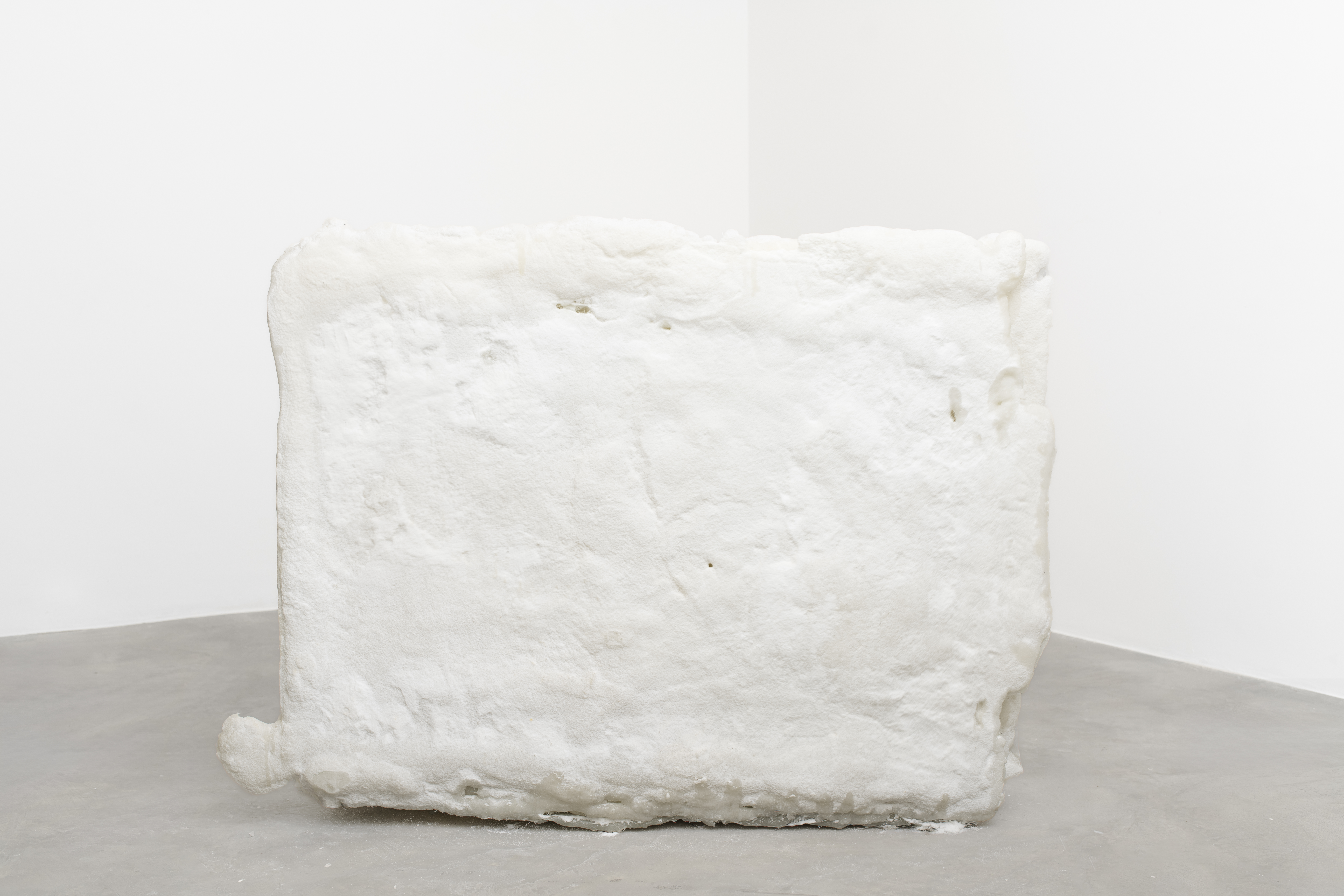
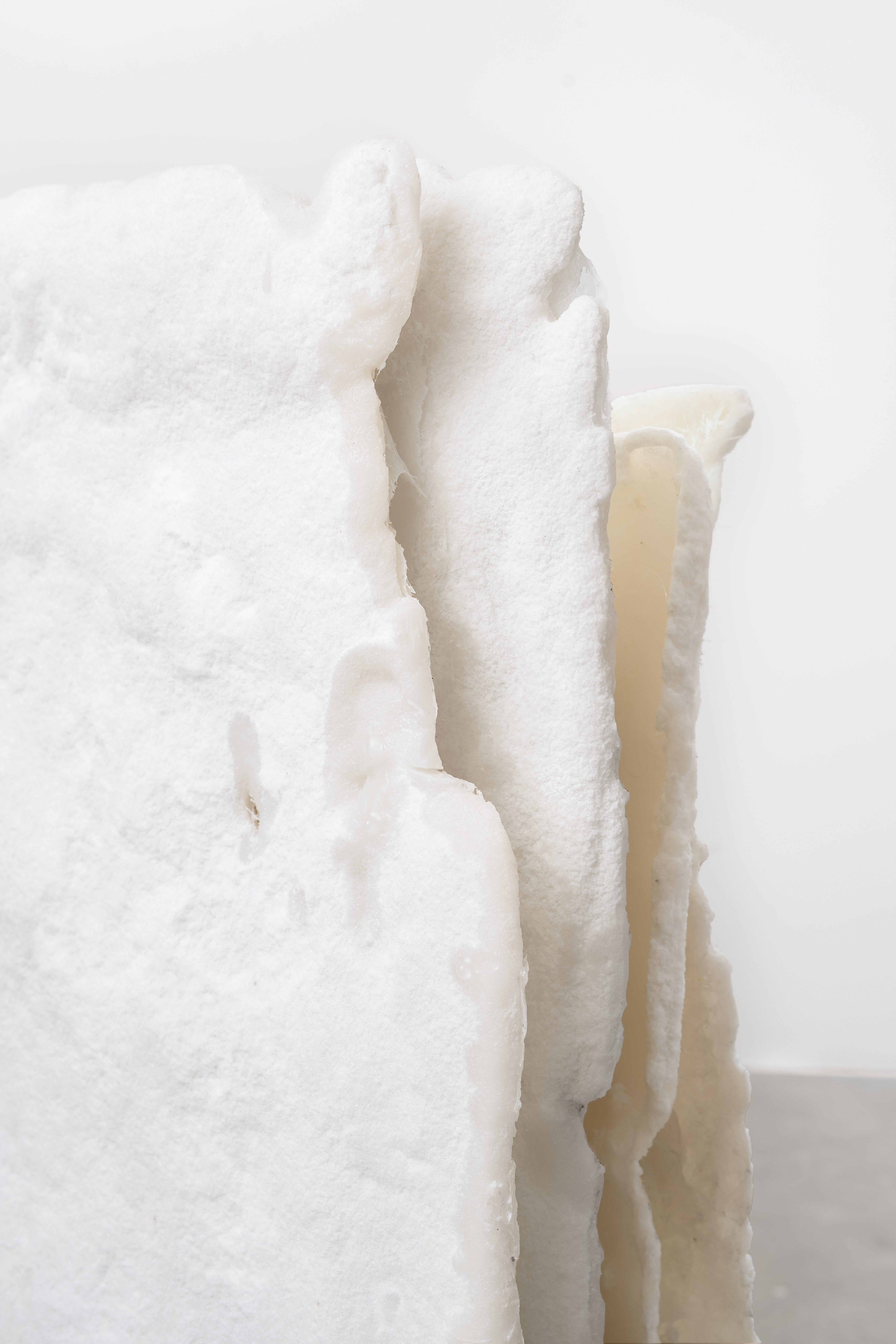
There is a silent violence in infiltration. It does not break through walls; it passes
through them slowly. Dampness does not conquer a territory. It inhabits it.
Samuel works with elemental materials because it is in them that the world still
resists interpretation. Louis Hjelmslev called this set of materials, prior to
organized language, the “expression-substance”: paint before color, murmur before
word, vibration before meaning. Perhaps that is exactly where his work settles: at
a point where matter has not yet been fully captured by discourse.
João Paulo Quintella